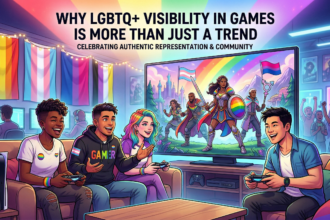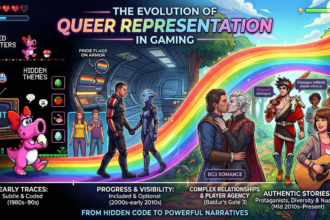
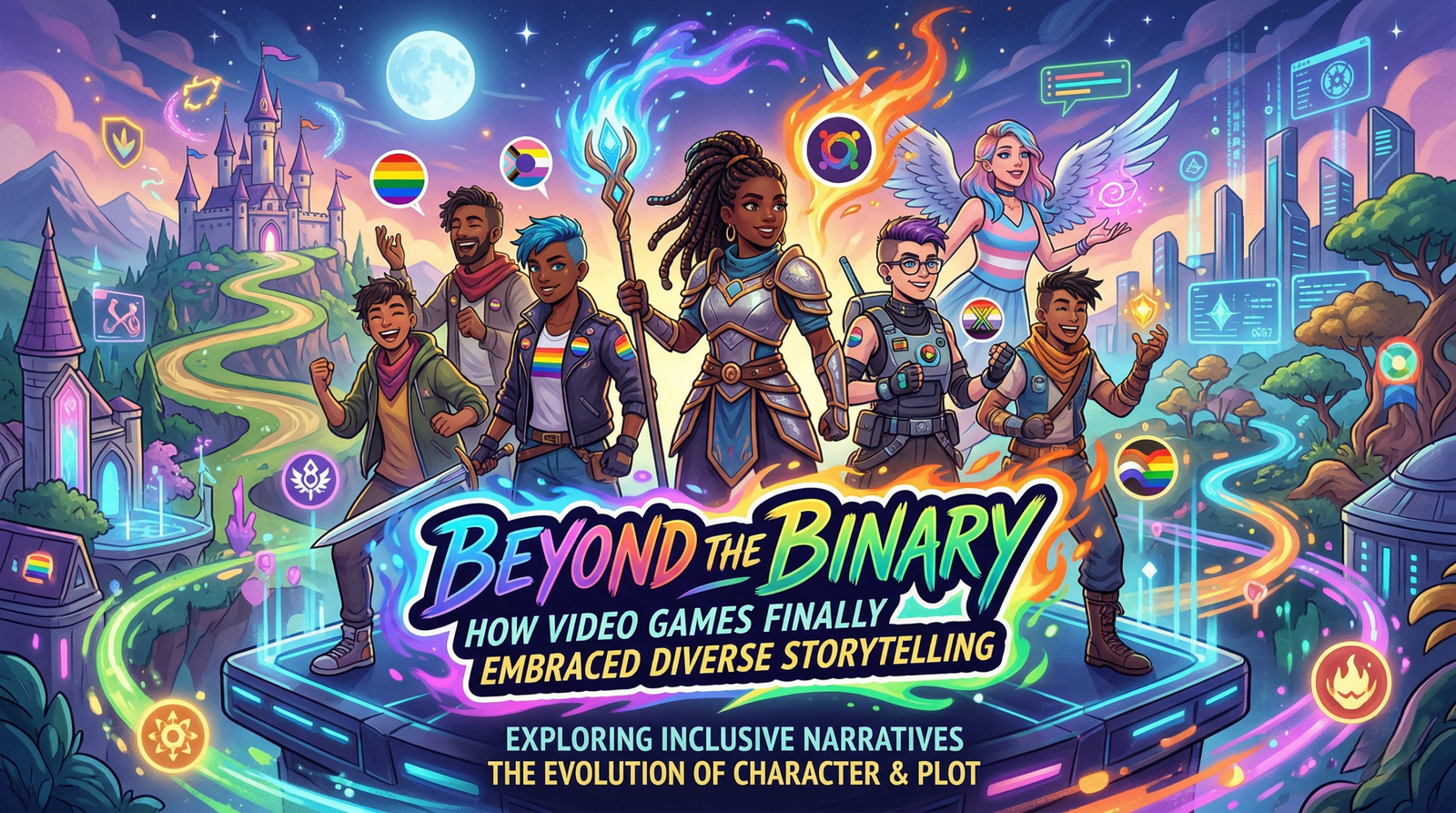
Today, video games are emerging as one of the most powerful mediums for diverse storytelling, breaking down barriers of gender, sexuality, race, and ability. We are moving beyond the binary, entering an era where every player can see a reflection of themselves on the screen.
The Indie Revolution: Paving the Way
While major AAA studios were often hesitant to take risks on non-traditional leads, the indie scene became the laboratory for inclusive storytelling. Smaller studios proved that audiences were hungry for stories that explored the human condition in all its variety.
-
- Gone Home (2013): A seminal title that focused on a young woman discovering her sister’s queer identity, proving that a game without combat could be deeply engaging.
- Celeste (2018): While appearing to be a simple platformer, it offered a profound metaphor for anxiety and was later confirmed by its creator to be a journey of trans identity.
- Hades (2020): Supergiant Games reimagined Greek mythology with a pansexual protagonist and a cast that reflected a wide spectrum of ethnicities and relationship dynamics.
The AAA Pivot: Mainstream Representation
Success in the indie world eventually forced the “big players” to take notice. Representation is no longer relegated to side characters; it has taken center stage in some of the most expensive and successful productions in history.
Naughty Dog’s The Last of Us Part II made waves by featuring a lesbian lead in Ellie and a prominent trans character in Lev. Similarly, Horizon Zero Dawn and its sequel introduced Aloy, a female lead whose story is defined by her intellect and strength rather than romantic tropes. Even the hero-shooter genre, led by Apex Legends and Overwatch, has curated rosters that represent dozens of nationalities, sexualities, and physical disabilities.
“Games are unique because they offer empathy through agency. When you play as someone different from yourself, you don’t just watch their story—you inhabit it.”
Player Agency and the Power of Choice
Perhaps the most significant leap forward has been in the realm of character creation. Modern RPGs (Role-Playing Games) have largely moved away from gender-locked roles. Titles like Cyberpunk 2077 and Baldur’s Gate 3 have deconstructed the traditional binary by allowing players to mix and match body types, voices, and pronouns independently.
This level of customization isn’t just a “feature”—it is an act of validation. For many players, the ability to create a character that mirrors their own non-binary or gender-fluid identity is a transformative experience that traditional media like film or literature cannot replicate.
Why It Matters
Diversity in gaming is often met with the “forced diversity” critique, but the data tells a different story. Inclusivity isn’t just a moral choice; it’s a creative and commercial one. Diverse writers and developers bring fresh perspectives, leading to richer worlds and more nuanced plots that avoid the clichés of the past.
Moreover, representation fosters empathy. By putting players in the shoes of a character facing systemic racism, or navigating the world with a disability, games provide a window into lived experiences that many might never otherwise encounter.