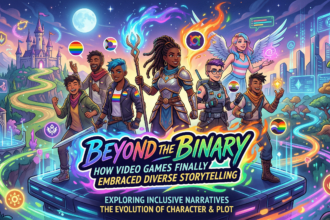
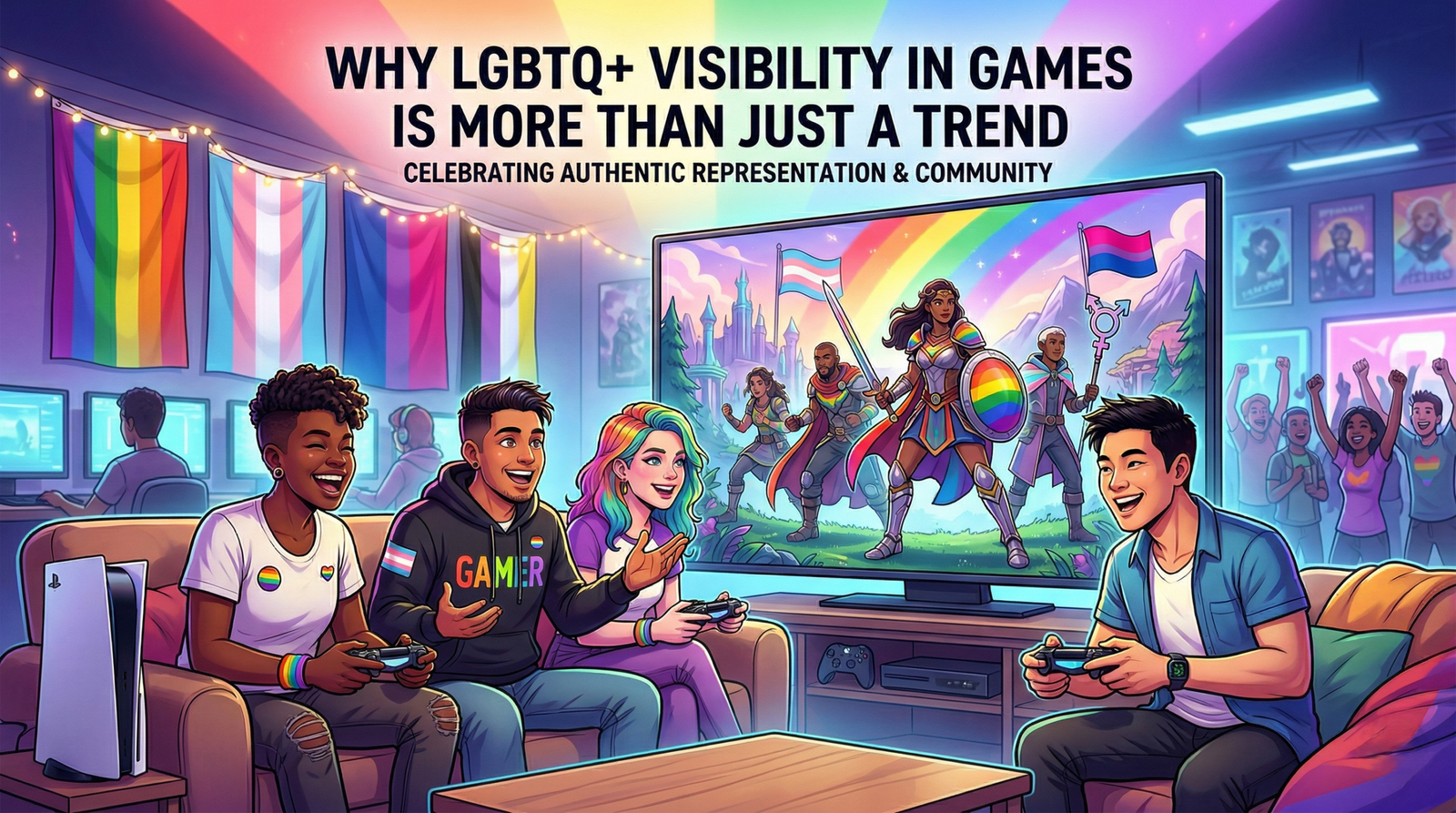
Exploring the shift from pixelated subtext to protagonist powerhouses.
While some critics dismiss this shift as a passing “trend” or a corporate box-ticking exercise, a closer look reveals that inclusive representation is a fundamental evolution of the medium. Here is why LGBTQ+ visibility is a permanent—and vital—level-up for the gaming industry.
From Subtext to Center Stage
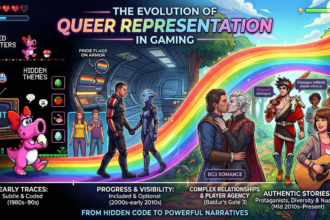
In the early days of gaming, queer representation was often relegated to “queer coding”—where villains exhibited stereotypical traits—or was buried so deep in subtext that only those looking for it could find it. Games like The Sims (1999) broke ground by allowing same-sex relationships, but it was often treated as a sandbox quirk rather than a narrative focus.
Fast forward to today, and we see characters like Ellie in The Last of Us Part II, Lev in the same franchise, or the cast of Life is Strange. These are not characters whose identities are a “twist”; their identities are woven into the fabric of their humanity. This shift represents a move toward authentic storytelling where LGBTQ+ characters are allowed to be heroes, anti-heroes, and everything in between.
The Power of “Seeing Yourself”
Representation is a mirror. For LGBTQ+ youth, seeing a character navigate a world successfully while being their authentic self can be life-changing. It validates their existence in a space they have loved for years but often felt excluded from.
Gaming is uniquely positioned to build empathy because it is interactive. When a player inhabits a character, they don’t just watch their journey; they experience it. By playing as a queer character, non-LGBTQ+ players can gain a deeper understanding of perspectives different from their own, fostering empathy in a way that passive media often cannot.
The Economic Reality
The “trend” argument also falls flat when looking at market data. The gaming demographic is changing. According to a 2023 GLAAD report, one in five Gen Z gamers identify as LGBTQ+. Developers are not just “being woke”; they are catering to their actual audience.
-
- Retention: Players are more likely to support franchises that make them feel seen.
-
- Innovation: New perspectives lead to fresh stories, moving away from the tired tropes of the “damsel in distress” or the “grizzled space marine.”
-
- Market Reach: Games like Baldur’s Gate 3 have shown that total freedom in romance and identity can lead to massive critical and commercial success.
Challenging the “Default”
For a long time, the “default” character was a straight, cisgender male. Any deviation from this was seen as “political.” However, the industry is finally recognizing that everyone has an identity. Including a trans character or a lesbian protagonist isn’t making a game “political”—it’s making it realistic.
“Diversity is not a quota to be filled; it is a richness of experience that makes our fictional worlds feel as complex and beautiful as our real one.”
Conclusion: A New Horizon
As we move into the next generation of gaming, the push for LGBTQ+ visibility is only going to grow. It is fueled by a new wave of diverse developers, more sophisticated narrative tools, and a global community that demands better representation.
LGBTQ+ visibility isn’t a trend because human beings are not a trend. As long as queer people play games, they will—and should—be part of the stories those games tell. By embracing this, the gaming industry isn’t just checking a box; it’s unlocking a whole new level of creative potential.